gps-sdr-sim alternative: real-time, multi-constellation SDR
A gps-sdr-sim alternative: multi-constellation, real-time moving trajectories, and record & replay on HackRF, bladeRF and USRP. Supported, no six-figure lab.
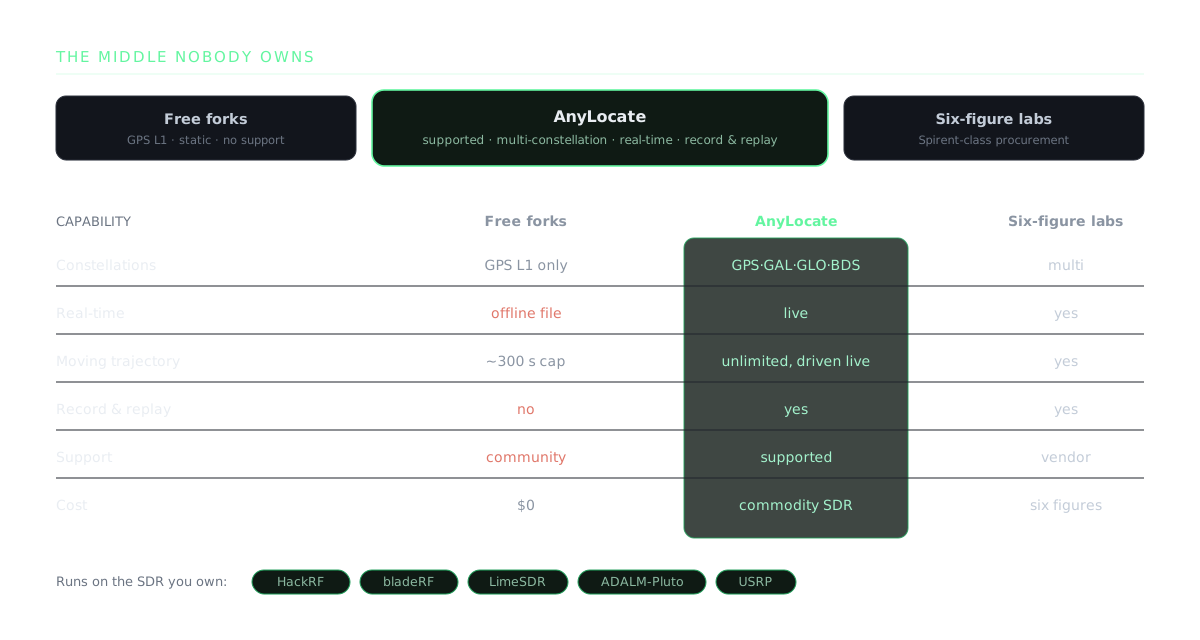
gps-sdr-sim is where almost everyone starts: point it at a HackRF, generate a file, get a fix. It is also where a lot of projects get stuck, because the moment you need more than one constellation, a trajectory that actually moves, or a signal that runs in real time, you hit its edges. The tell is unmistakable. Engineers start searching for the forks by name (gps-sdr-sim-realtime, multi-sdr-gps-sim, gnss-sdr-sim), patching around limits the original was never meant to cross.
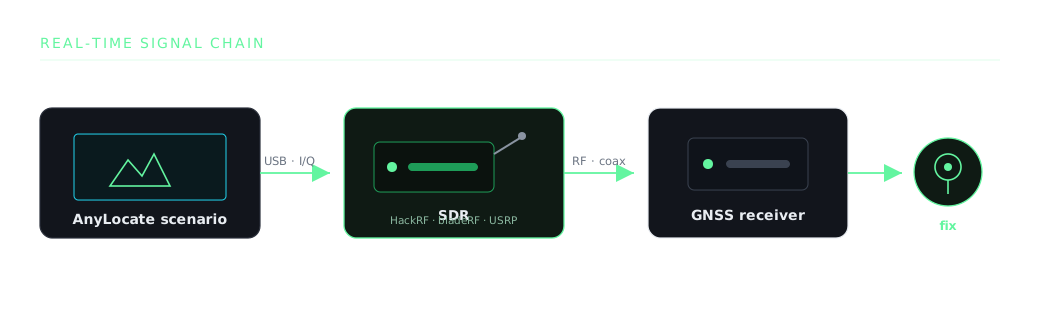
AnyLocate is built for exactly that moment: the supported step up, on the same commodity SDR you already own.
”It only does GPS: how do I add Galileo, GLONASS, BeiDou?”
gps-sdr-sim is GPS L1 C/A only. Adding another constellation means forking C and reverse-engineering a signal structure, the recurring, unanswered ask in its issue tracker. AnyLocate generates multi-constellation, multi-frequency scenarios out of the box, so you validate every signal your receiver supports, not just one.
”Why is my spoof stuck in one place?”
The original is fundamentally static: its dynamic mode is capped at roughly 300 s of motion (the user-motion buffer is a compile-time constant), and it precomputes an I/Q file offline. AnyLocate generates the signal in real time, so a trajectory can run as long as you like, follow a real route, or be driven live from an external input.
”It isn’t real-time”
Because gps-sdr-sim prepares the file offline and replays it, the receiver’s clock drifts away from the file’s time and interactive control is impossible. As the community bluntly puts it, it’s not a method for real-time work. Real-time generation is the core of what AnyLocate does.
Record a real drive, replay it forever
Beyond scripted scenarios, capture live-sky signals in the field once and replay them on the bench as many times as you need: the reliable, repeatable regression signal the DIY tools never gave you.
The gap it fills
The free forks stop at GPS L1, static, one SDR, no support. The big-name simulators start at a six-figure procurement. Nobody owns the middle: supported, multi-constellation, moving, real-time, record & replay, without a Spirent budget. That is exactly the slot AnyLocate is built for, on HackRF, bladeRF, LimeSDR, ADALM-Pluto and USRP.