GNSS receiver testing: TTFF, sensitivity, production test
Bench-test GNSS receivers for R&D and production: measure TTFF and acquisition sensitivity in dBm indoors, real RF into the receiver, every run identical.
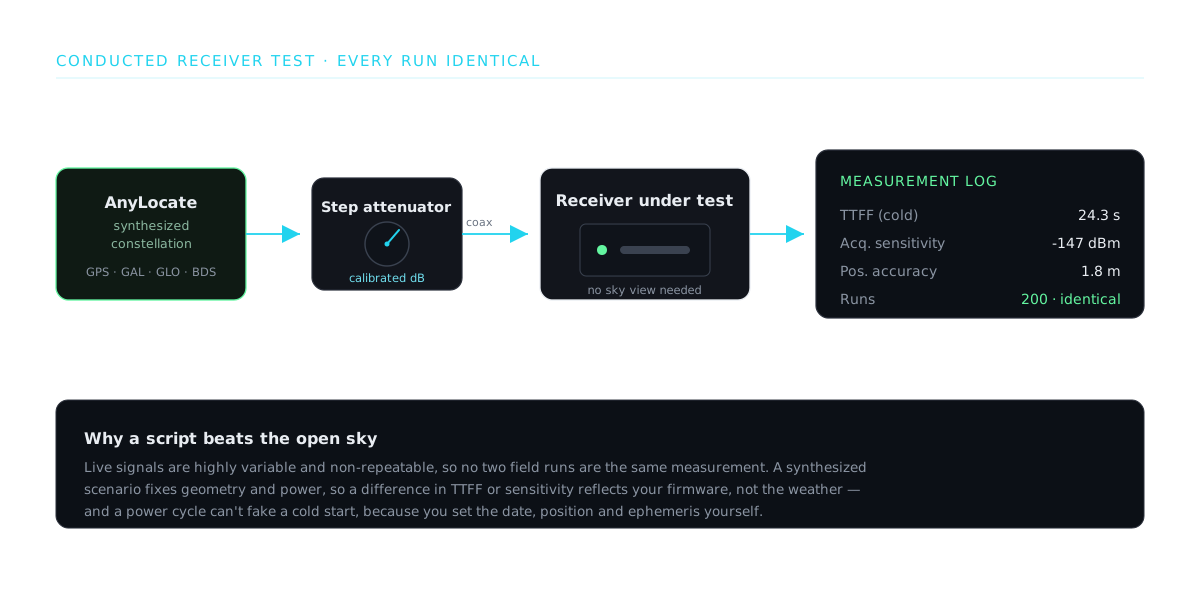
You cannot qualify a GNSS receiver against the open sky. Live signals are, in the words every test engineer knows, highly variable and non-repeatable: the geometry, multipath and atmosphere shift from one minute to the next, so no two runs are the same measurement. Yet the numbers that decide whether a receiver ships (time to first fix, acquisition sensitivity, position accuracy) only mean something if the test is repeatable.
AnyLocate synthesizes the constellation on your bench, so every variable is under your control and every run is identical.
Measure a TTFF you can actually trust
Time to first fix is the headline number, and it is only meaningful per start condition: cold, warm, hot. The catch most teams hit: power-cycling is not a cold start. A receiver keeps almanac, ephemeris and last-known position in battery-backed memory and will hot-start out of a power cycle, flattering your numbers.
With a scriptable signal you force the real thing: set the simulated date, position and ephemeris so acquisition genuinely starts from nothing. Automate the run and repeat it. The industry practice of 200 TTFF measurements per start condition is impossible to do by hand outdoors, and trivial when the sky is a script.
Find the acquisition-sensitivity threshold, in dBm
Sensitivity is where live sky simply cannot help you: you need calibrated, stepped signal power to walk the receiver down to the level where it can no longer acquire within the target time. A simulator sets absolute power precisely, so you can report the acquisition threshold in dBm and prove margin against spec, and the measurement maps one-to-one onto the capability of a controlled signal source.
Validate every constellation, not just GPS
A clean GPS-only test says nothing about whether the GLONASS, Galileo, BeiDou or QZSS path in your receiver actually works. Generate multi-constellation, multi-frequency scenarios and exercise each signal your product claims to support.
Test indoors, at production speed
On the manufacturing line there is no sky view (factories are steel boxes) and the per-unit test budget is often under a minute, while a real outdoor cold lock can take one and a half to three and a half minutes. A conducted, full-strength simulated signal gives every unit a fast, identical, pass/fail functional test that verifies the whole RF and antenna path, not just the chipset over a debug port.