Lab-test ADAS positioning: tunnels, canyons, GNSS outages
Reproduce urban-canyon multipath, tunnel dead-reckoning and GNSS outages on the bench, with real RF for repeatable record-and-replay ADAS positioning tests.
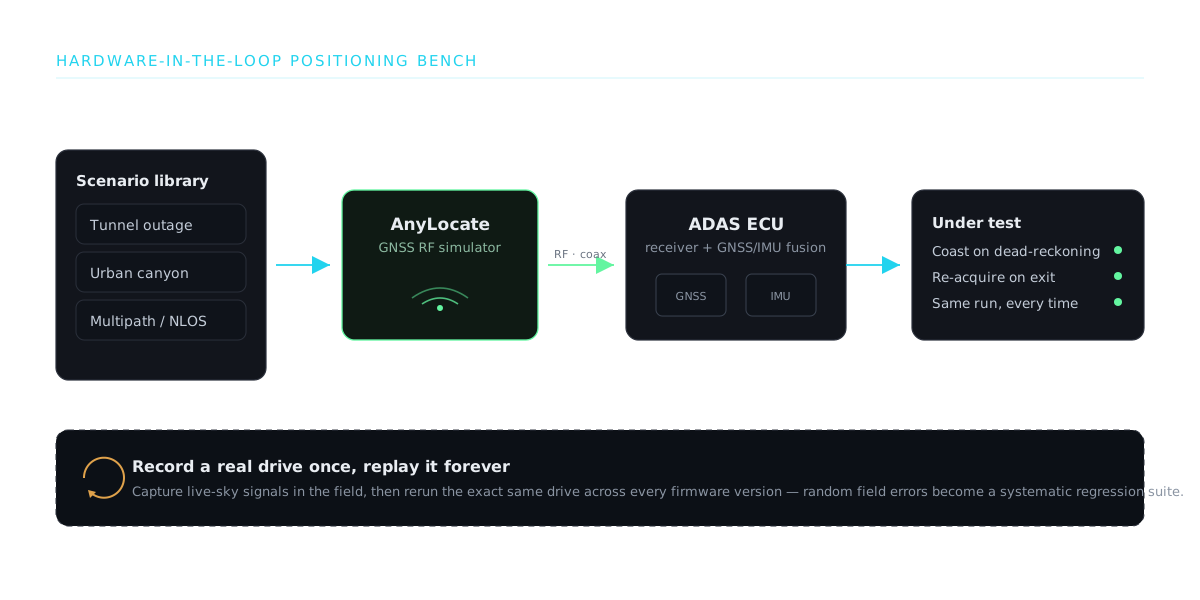
Proving that a vehicle positions correctly where GNSS is hardest (tunnels, urban canyons, multi-level interchanges) is exactly where road testing breaks down. Field drives are, as the test-equipment vendors put it, realistic but not reproducible, and the sheer number of kilometres needed to cover the edge cases makes them impractical, expensive, and in the case of failure scenarios, dangerous.
AnyLocate moves that work into the lab. It feeds real GNSS RF into the receiver or the HIL rig, so you validate the whole positioning stack against the hard environments, on demand, and identically every time.
Reproduce the environments that break positioning
An urban canyon doesn’t just cost you a fix; masking, multipath and non-line-of-sight reflections produce confidently wrong fixes. Model that geometry and your receiver experiences the same misleading signals it would between skyscrapers, but now the run is repeatable, so a change in behaviour points at your firmware, not at the weather.
Test dead-reckoning and sensor fusion through outages
Drive a scripted route into a tunnel and let the simulated sky go dark. Your GNSS+IMU fusion has to coast on dead reckoning and re-acquire cleanly on exit, the exact edge case that is unsafe to hunt for on real roads and trivial to script here.
Record a real drive, replay it forever
Capture a genuine field drive once and replay it on the bench across every algorithm version. Repeating the same signal is what makes random errors resolve into systematic ones you can actually fix, and what turns a one-off field bug into a permanent regression test.
Stress the safety cases
Inject a spoofing or jamming event mid-scenario and confirm the vehicle degrades safely, a security-relevant functional test you can run as routinely as any other, because nothing ever leaves the bench.