GNSS spoofing & jamming resilience test with conducted RF
Test GPS spoofing detection & jamming resilience with conducted RF in a shielded lab: repeatable spoof and jam signals, no over-the-air transmission.
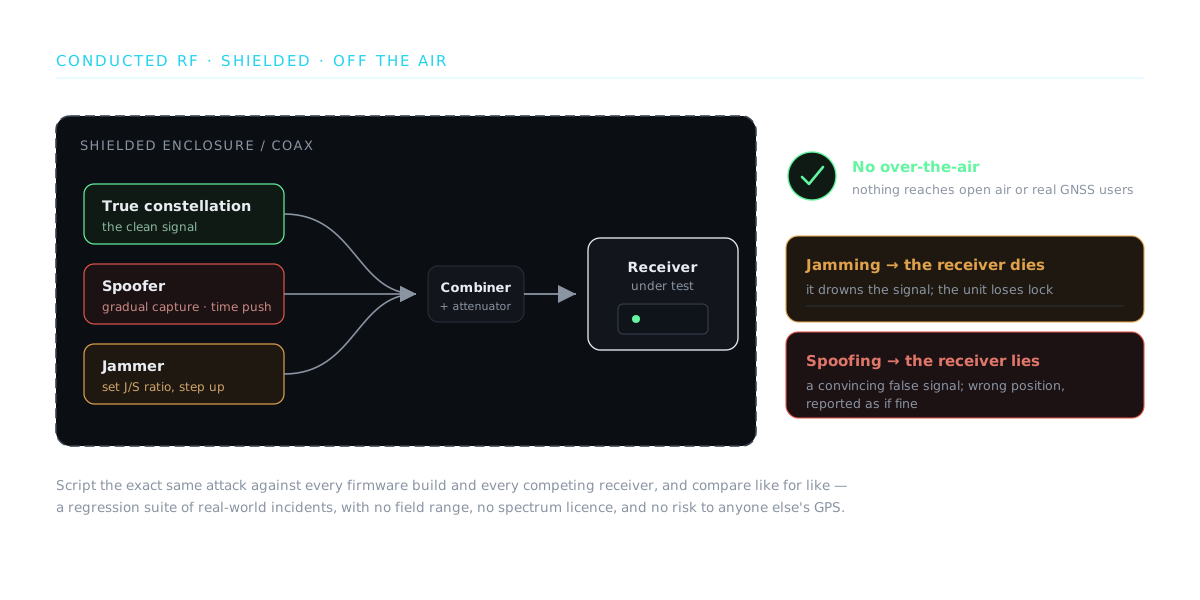
GNSS interference is the fastest-rising threat in positioning, with jamming and spoofing incidents climbing sharply since 2023, and the engineers who have to answer “is our receiver resilient?” face a hard problem: the honest test is to attack a real receiver with real spoofing and jamming signals, and doing that over the air is both illegal and reckless.
The answer the whole field converges on is conducted RF: keep the attack in a cable or a shielded chamber, never on the air. AnyLocate generates the true constellation and the threat on the same controlled path, so you can be aggressive with the attack and safe with the law at once.
Jamming causes the receiver to die; spoofing causes the receiver to lie.
Validate your receiver against spoofing
Understanding how a receiver behaves under attack is the key to detecting the attack, and that requires systematic, repeatable tests of receiver performance in the presence of a spoofer, inside a completely closed system that will not interfere with live GNSS.
Script the attack precisely: a gradual capture that walks the position away without a jump, a time push against a timing receiver, a meaconing replay of recorded signals. Because it is conducted and scripted, you can run the exact same attack against every firmware build and every competing receiver, and compare like for like.
Test jamming and interference resilience
Set a defined j-to-signal ratio and step it up. Measure where the receiver loses lock, whether it flags the interference, and how fast it recovers: the numbers that tell you whether a system will keep positioning through a contested environment.
Build a repeatable resilience test bed
The value is repeatability. Convert real-world incidents into a regression suite of scenarios, keep a library of attacks, and re-run them on demand. Whether you are hardening a receiver, validating a detection algorithm, or proving PNT resilience for critical infrastructure and timing, the same shielded, conducted bench does it safely, with no field range, no spectrum licence, no risk to anyone else’s GPS.