Bench-test drone GPS failsafe & return-to-home, no flying
Bench-test drone GPS failsafe, return-to-home and GPS-denied navigation without flying. Real RF fools the actual receiver, unlike PX4/ArduPilot fault injection.
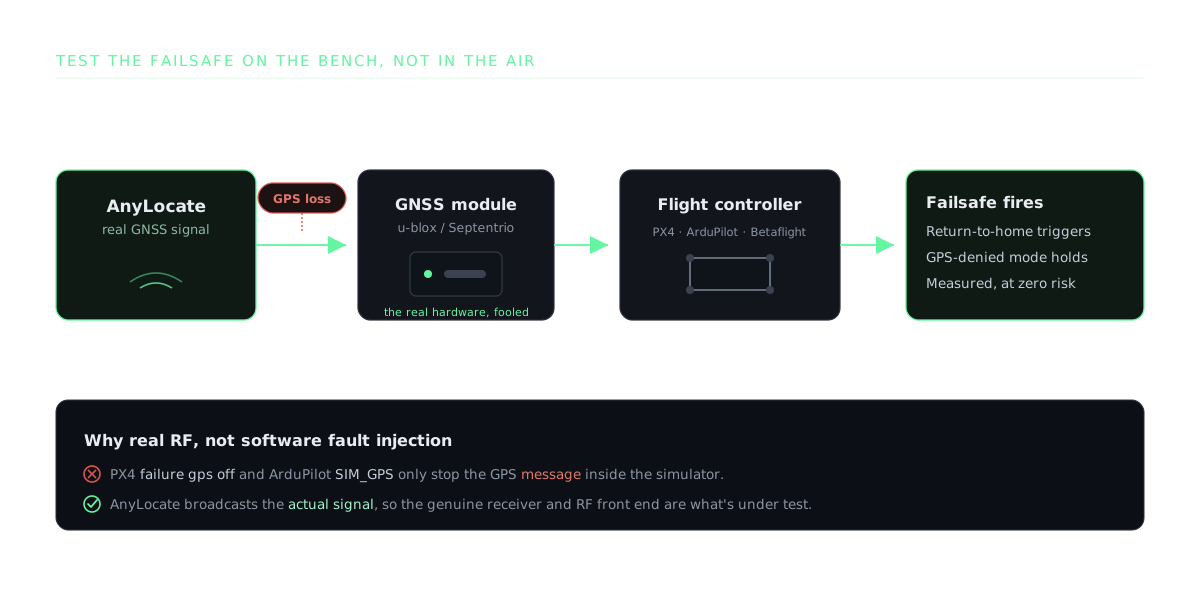
Every drone team has the same nightmare: the aircraft that flies away when GPS glitches. Proving the failsafe actually catches it is the one test you least want to run in the air, and the free tooling everyone reaches for doesn’t really run it at all.
PX4’s failure gps off and ArduPilot’s SIM_GPS inject the fault at the software layer: they stop the GPS messages inside the simulator, but they never touch the real receiver or the RF front end. AnyLocate closes that gap by broadcasting an authentic signal into the actual GNSS module, so the hardware that flies is the hardware under test.
Test failsafe and return-to-home without flying
Bench the autopilot, feed its receiver a real fix, then script a GPS loss or a sudden position jump. The failsafe and RTH logic fire exactly as they would aloft, and you’re watching a monitor, not chasing a runaway quad across a field.
Simulate GPS loss and denial for real
Fade the constellation, degrade the geometry, or cut it entirely, and confirm the drone transitions cleanly into its GPS-denied modes and holds predictable behaviour. It’s the controlled way to induce the denied condition your VIO and dead-reckoning stacks are built for.
Tune GPS Rescue on the bench: Betaflight and FPV
It isn’t only PX4 and ArduPilot. Betaflight’s GPS Rescue and FPV return-to-home need the same proof before you trust them over a treeline: feed the flight controller a real fix, script the failsafe trigger, and watch the craft decide to come home, on the bench, at zero risk. SITL fault injection only alters the GPS message; only real RF makes the actual receiver believe it lost, then reacquired, the sky.
Bench-test jamming and spoofing resilience
Before you send an aircraft into a contested environment, prove it survives one. Add jamming or a spoofing capture to the scenario and measure how the flight controller responds, all conducted in a shielded setup, nothing on the open air.
Validate counter-UAS systems
Turned around, the same capability is a counter-UAS test bench: AnyLocate generates the controlled GNSS threat so a detect-and-defeat system can be built against a repeatable, measurable attack, safely, in the lab, instead of the range.