Put your phone anywhere on Earth: test any location app
Make your phone's real GNSS chip report any location you pick, a genuine fix apps can't flag. Roam, check in, and test location apps from your desk.
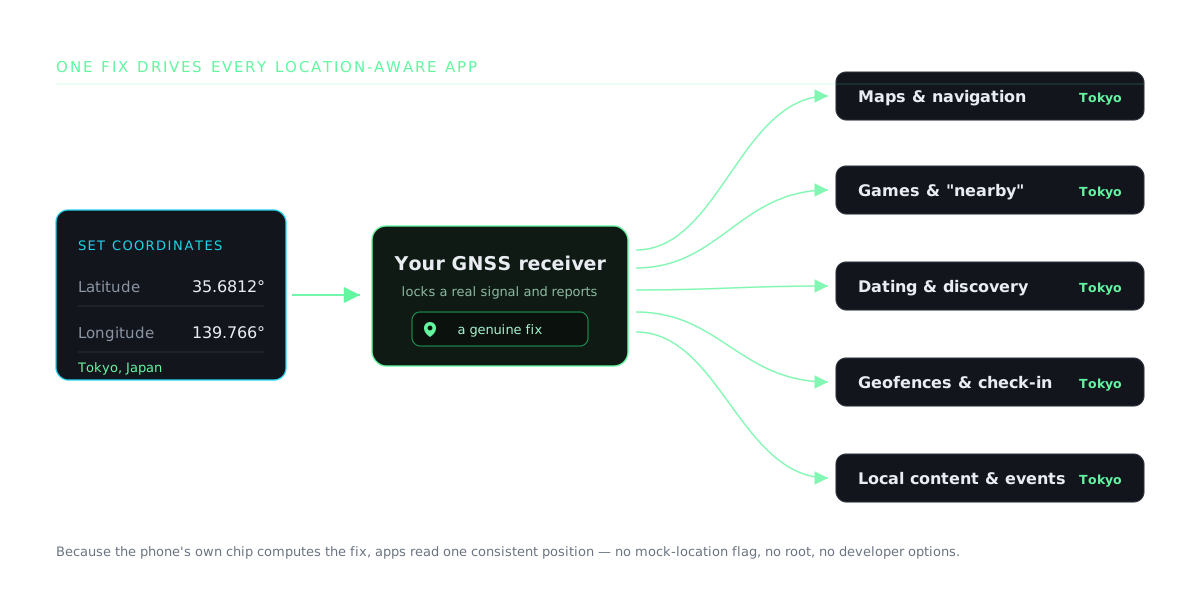
Your phone tells apps where you are all day long, and those apps decide what you see, what you can do, and where you can check in based on that one signal. AnyLocate hands you the signal. Point your device’s GNSS receiver at any coordinates on Earth and every location-aware app follows, because as far as the phone is concerned, that is where it is.
A real fix, not a mock flag
This is the difference that matters. A fake-GPS app sets Android’s mock-location flag, and any serious app (dating, delivery, games) reads that flag and shuts you out. AnyLocate never touches the software layer. It broadcasts an authentic satellite signal, the phone’s own chip locks onto it, and the chip computes a genuine fix. No mock flag, no root, no developer options, so there is nothing for a mock-location check to find.
Roam the world from your desk
Drop your device into Tokyo, Paris, or New York and the world rearranges around it: local recommendations, city-specific feeds, regional events, and location check-ins all behave as if you were standing there. Check in from anywhere. Explore what a service looks like on the other side of the planet. Your seat never moves.
Test location features without traveling
The same power is a QA superpower. If you build location features (geofencing, “nearby,” check-ins, location rewards), you can validate them across cities and countries without a plane ticket. Drive your device along a scripted route to watch geofences enter and exit, jump it between regions to check localized content, and reproduce a user’s exact location to chase down a bug. All of it from the bench, on real signals your app can’t tell apart from the sky.
What moves, and what doesn’t
AnyLocate sets your device’s satellite position and whatever apps derive from that GPS fix: maps, geofences, check-ins, “nearby” results. It does not touch gating that lives in your account or your network IP. Region locks tied to your login, billing-country rules, and IP-based restrictions don’t read the sky, so they don’t move when your fix does. It changes where your phone is, not who your account says you are.